
There's a story I come back to often when I'm working with real estate agents and investors who want to know why design decisions made *before* the market shifts are the ones that matter most.
It's not a story about a perfect project, it's about a pivot.
My son had a personal home in Jacksonville. Together, we made the decision to transition it into a short-term rental, a smart move in a market where well-designed STRs were commanding premium nightly rates and attracting discerning guests. We designed with that guest in mind: cohesive, elevated, deliberately calm. Then COVID arrived. The short-term rental market went quiet almost overnight.
What happened next is what I want every real estate agent and property investor in Northeast Florida to understand: *the same design decisions that made that home exceptional for guests made it irresistible to buyers. We pivoted to a residential sale, and it sold.
Here's exactly what we did, and why it worked.
How Strategic Design Choices Protected the Property's Value When the Market Turned
When we originally designed the space as a short-term rental, we weren't just thinking about aesthetics. With my background in psychology, I'm always thinking about how a space functions under pressure, how it holds up to wear, how it photographs, and how it makes someone feel the moment they walk in.
Those principles don't change whether your audience is a weekend guest booking on Airbnb or a buyer walking through with their realtor on a Tuesday afternoon. Both want to feel something. Both make emotional decisions first and logical ones second.
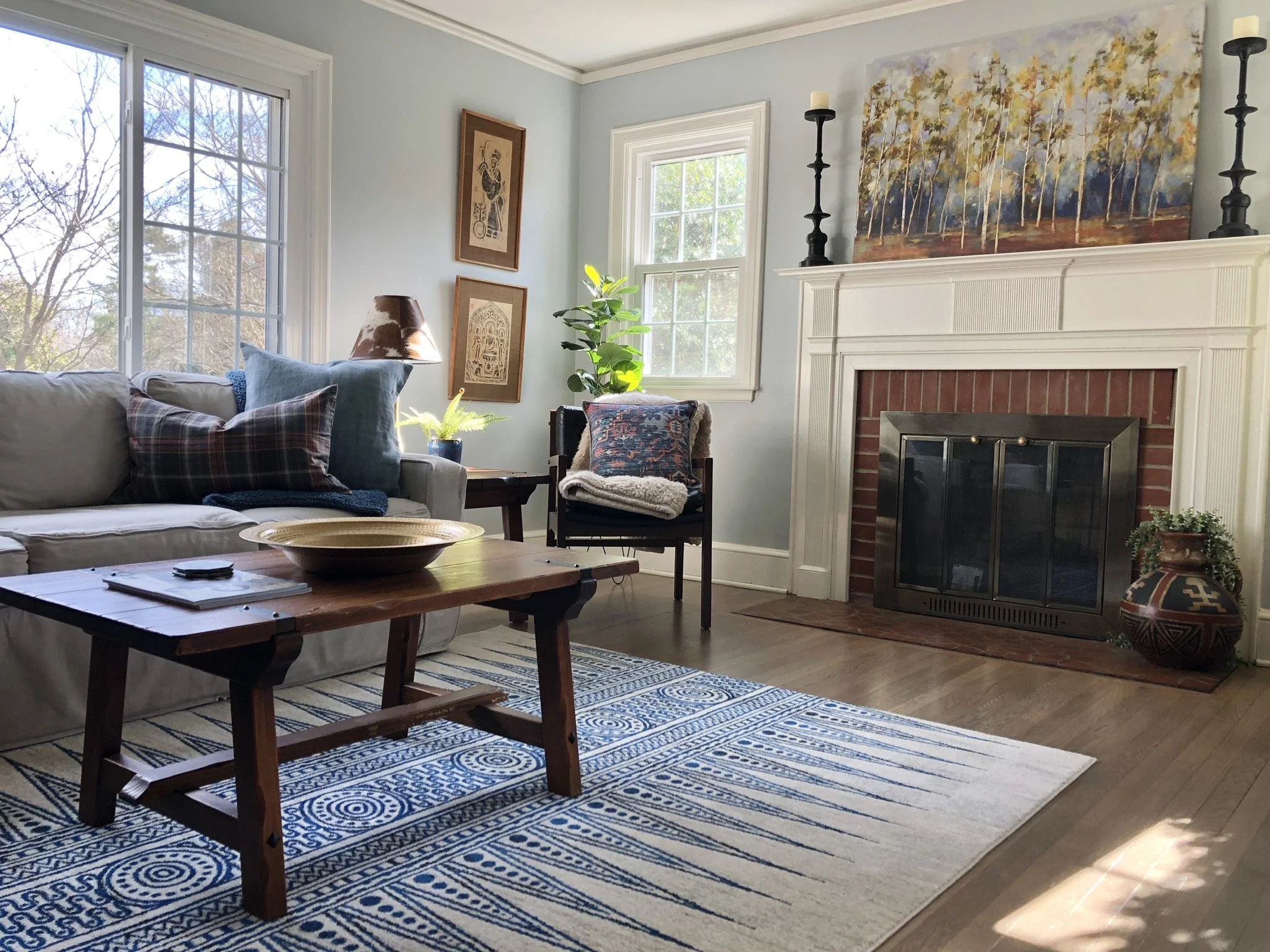
Because we had chosen durable, investment-grade furnishings, performance fabrics, timeless finishes, and a cohesive color palette grounded in calm, the property didn't need to be stripped and restaged when the market shifted. The design *already spoke to buyers*. It said: this home has been loved, thought through, and cared for.
That's the quiet power of designing with flexibility in mind from day one. You're not just creating a beautiful short-term rental. You're building an asset that can adapt to market conditions, to buyer preferences, to whatever comes next.
The High-ROI Changes That Made the Biggest Difference
One of the most significant decisions we made was converting the home office into a true bedroom. In Northeast Florida's real estate market, bedroom count is a primary driver of both rental income and sale price. Adding a functional bedroom, thoughtfully finished, not an afterthought, immediately elevated the property's appeal across both audiences.
But the conversion itself was only part of the story. How that room was executed mattered just as much.
We created what I like to call a "Be Our Guest" bedroom, a space that felt like a private retreat rather than a spare room. Layered bedding, intentional lighting, a considered color palette designed to support rest. Every element was chosen to make a guest, or a buyer, feel that this room was designed *for them*, not just filled with furniture.
Beyond the bedroom, the high-ROI decisions we focused on included:
Lighting at every layer Ambient, task, and accent lighting throughout, not just overhead fixtures. Light is the most underestimated lever in hospitality design.
Consistent color story A palette that flowed room to room created the sense of a larger, more cohesive home, critical for photography and walkthroughs alike.
Scaled furnishings. Pieces sized correctly to the space so every room read as intentional and generous, never cramped.
Durable finishes chosen for longevity.Nothing that would look tired after six months of guest use or show wear during showings.
Each of these choices had a measurable impact on how the property was received, first as a rental listing, then as a home for sale.
The Psychology Behind a Space That Feels Like a Haven, Not a Hotel
This is where my training in psychology intersects most directly with my work as a designer, and it's the piece that most generic staging or decorating skips entirely.
A space that feels like a *personalized haven* rather than a generic rental has one thing in common: it makes you feel seen. Not overwhelmed, not sold to, just at ease.
For this project, that meant making deliberate decisions about sensory experience at every level. Color palettes were warm enough to feel welcoming but restrained enough to feel sophisticated. Textures were tactile and layered, not just visual. Natural light was maximized. Scale was considered so that no room felt chaotic or under-furnished.
"The goal was never to design a rental that looked nice in photos. It was to design a home that felt right the moment you crossed the threshold, because that feeling is what guests remember, and it's what buyers fall in love with."
Psychology tells us that people make decisions about how they feel in a space within seconds of entering it. That first impression is formed before a single word is exchanged between a buyer and their realtor. Our job as designers is to engineer that moment, to remove friction, create calm, and signal quality through every curated detail.
The Biggest Design Challenge, and How We Solved It
Every project has at least one chapter I don't photograph. On this one, it was the gap between the raw maintenance phase and the finished, polished vision.
When you're transitioning a personal home into a rental, or staging for sale, you're often working with a property that has years of lived-in history. That's not a problem; it's material. But it requires honest assessment, and sometimes difficult decisions about what stays and what goes.
The biggest challenge here was managing the emotional weight of the space. It was my son's home. There were choices that felt personal to him that weren't going to serve a guest or a buyer, and navigating that conversation with care while keeping the design vision clear required both the designer and the psychology training.
The solution was to focus the conversation on outcomes rather than objects. Instead of "this doesn't work," we talked about what we wanted a buyer to feel in this room, and worked backward from there. That reframe changed everything. It transformed the editing process from a loss into a curation, and the final result was a home that felt elevated, intentional, and genuinely beautiful, without erasing the soul of the space.
That approach, outcome-led, emotion-aware design, is something I bring to every project, whether we're designing a Jacksonville STR from scratch or preparing a Ponte Vedra home for the market.
What I'd Tell Every Real Estate Agent and High-Net-Worth Homeowner Right Now
If you're reading this as a realtor trying to maximize your listing's appeal, or as a property investor unsure how much to invest in design before listing: the market does not reward generic.
Buyers and guests in Northeast Florida, especially at the higher end of the market, have seen thousands of listings. They know what "staged" looks like. They can tell the difference between a property that was thoughtfully designed and one that was hastily dressed for photos.
The number one piece of advice I give every real estate agent who calls me: don't wait until you're listing to think about design.
The properties that sell fastest and at the highest prices in Jacksonville, Saint Johns, and Ponte Vedra are the ones where design decisions were made with the next owner in mind, not the current one. That means a cohesive color palette. Correct scale. Quality fixtures. A bedroom count that reflects the market. Spaces that photograph beautifully because they're designed to be experienced beautifully.
This is exactly what our virtual design consultations are built for. You don't need to be in the same room as me to benefit from this process. I've worked with investors across the country, from initial walkthrough video to final sourcing list, and delivered the same clarity and quality as an in-person project. If you're preparing a property for sale or STR launch in Northeast Florida (or anywhere), a single strategy session can save you far more than it costs.
Frequently Asked Question
Frequently Asked Question
-
f your property has been lived in for more than three years, is being transitioned from a rental, or has rooms that feel disconnected in style or scale, a design consultation before listing is almost always worth it. Properties in Jacksonville and Northeast Florida that are move-in ready and visually cohesive sell faster and closer to asking price than those that aren't. A 2-hour strategy session with Peace of Mind Design can identify your highest-ROI changes before you spend a dollar on updates.
-
Yes — and this is one of the most valuable insights for property investors. Design choices grounded in timeless palettes, durable materials, and psychological comfort translate powerfully across both audiences. Guests and buyers are both making emotional decisions. A space that feels like a haven rather than a showroom performs in both markets, which gives owners flexibility to pivot as conditions change — exactly as we did with this Jacksonville property during COVID.
-
Home staging typically uses borrowed or rental furniture placed to make a vacant property photograph well. Interior design for sale — what we offer at Peace of Mind Design — focuses on making the existing space feel elevated, cohesive, and emotionally resonant through strategic editing, sourcing, and psychology-backed decisions. The result is a home that doesn't just look good in photos; it feels right in person, which is what closes deals.
-
In Northeast Florida's real estate market, bedroom count directly impacts both appraisal value and buyer appeal. Converting a formal office into a true, properly finished bedroom can meaningfully increase a home's sale price and broadens the buyer pool — particularly for families and those seeking multi-use spaces. The key is executing the conversion with the same quality as the rest of the home so it doesn't read as a compromise.
-
Peace of Mind Design's virtual process includes a video walkthrough review, a personalized design strategy, digital mood boards, a prioritized list of changes ranked by ROI impact, and a shoppable sourcing guide. Clients receive weekly communication and the same quality of strategic thinking as an in-person engagement. We've successfully completed projects in Saint Augustine, World Golf Village, and for remote investors across the country.
The Bottom Line
This project taught me something I already believed, and proved it in the most real-world way possible: design that is rooted in psychology, built for flexibility, and executed with intention doesn't just survive market volatility. It thrives because of it.
If you're a real estate agent in Jacksonville or a property investor anywhere in Northeast Florida, or managing a short-term rental and wondering whether design is worth the investment, I'd love to have that conversation with you.
Written by Gloria Staats
Author's Note: The core concepts and drafts of this post are original. An AI tool was utilized for copyediting, formatting, and language enhancement prior to publication.